
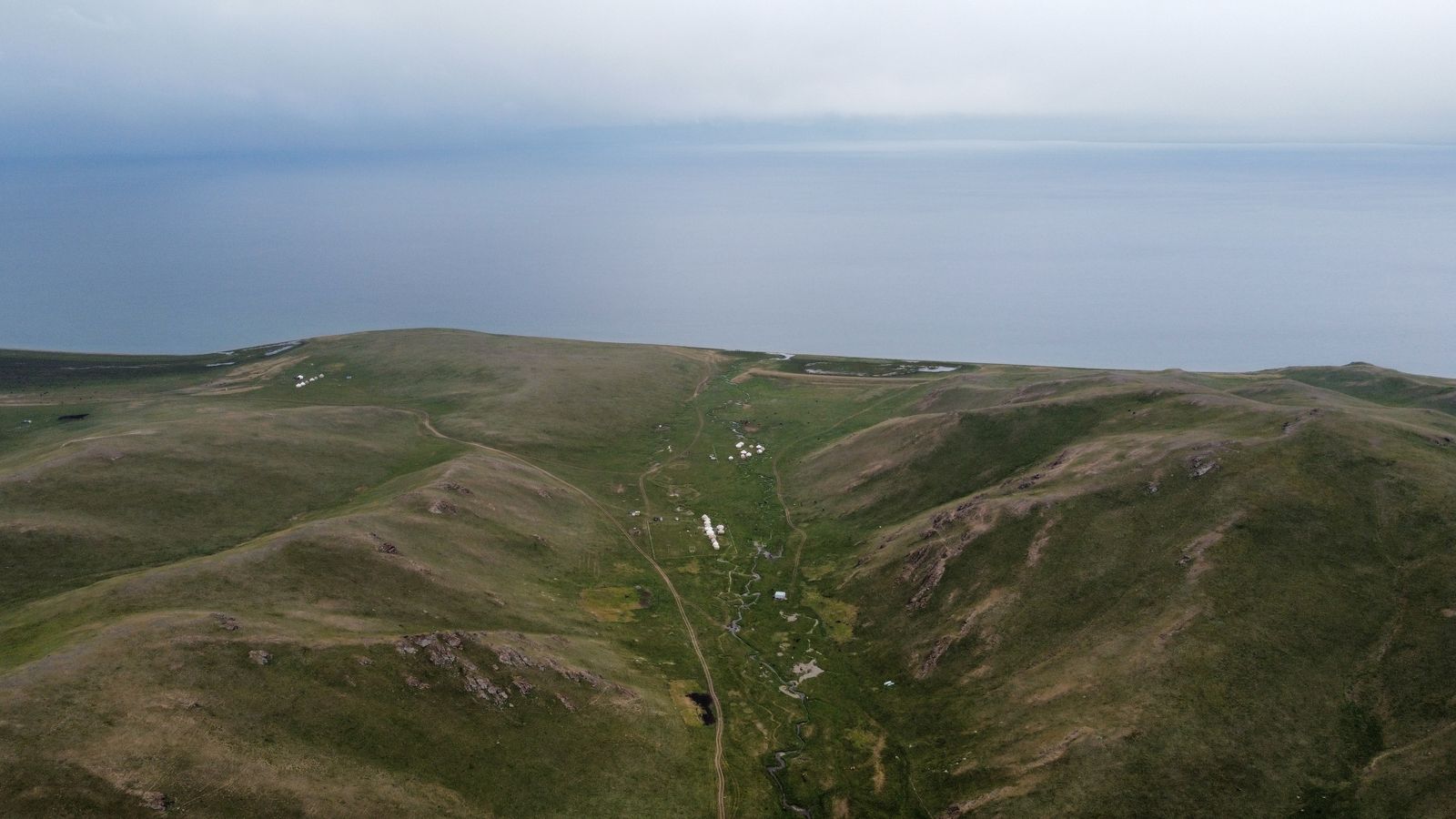
 Song-Kul from above
What is Song-Kul?
Song-Kul (also written Son-Kul, Song Köl or Сон-Көл) is Kyrgyzstan's second-largest lake and its most iconic landscape: 29 km of cold, glassy water sitting on a treeless plateau at 3,016 metres in the central Tian Shan. There are no towns, no power lines and no permanent buildings on its shores — only summer pastures (jailoo) where shepherd families graze horses, sheep and yaks from June to September, living in felt yurts exactly as their grandparents did.
For travellers, that combination is the draw: genuine nomadic life, a night sky with zero light pollution, and a horizon that makes every photo look staged. Most visitors come for two or three days as part of a loop through central Kyrgyzstan.
How to get to Song-Kul
Here's the part most blogs gloss over: there is no public transport to the lake. The nearest you can get by marshrutka (minibus) is Kochkor, still ~90 km and a 3,400 m mountain pass away from the water. Your realistic options:
| DIY: marshrutka + taxi | Organised tour (Asia Peaks) | |
|---|---|---|
| Route | Bishkek → Kochkor by marshrutka (~$4, 3.5 h), then negotiate a local 4x4 taxi to the lake (~$50–70 per car each way) | Hotel pickup in Bishkek, 4x4 the whole way with stops in Boom gorge and Kochkor |
| Realistic cost, 3 days | $80–120 pp (transport + yurt + meals), if your bargaining goes well | $475 pp fixed (group of 4), everything below included |
| Accommodation | Find a yurt on arrival or pre-book by phone in Kyrgyz/Russian | Yurt camp arranged and confirmed for your dates, half board |
| Language | Kyrgyz / Russian only beyond Kochkor | English-speaking guide throughout |
| Safety net | None — no phone signal, no state rescue service | A guide who knows the plateau and an agreed check-in plan |
| Booking | Piece it together on the ground | One message, answer within 24 hours, terms in writing |
The DIY route is a genuine adventure and we'll never pretend otherwise — plenty of hardy backpackers do it every summer. But be honest with yourself about the trade: you save roughly $350, and in exchange you take on pass-road taxi negotiations, unconfirmed beds, and three days with no way to call for help. If your Kyrgyzstan time is short or you're travelling as a couple or family, the maths usually favours the tour.
Song-Kul, the zero-hassle way
3 days · 2 yurt nights with half board · horseback day · English-speaking guide · English-speaking guide. Fixed price from $475 pp, runs from 2 travellers.
See the Song-Kul Jeep TourWhen to go
Song-Kul has a brutally short season, dictated by snow on the passes and by the shepherds' own calendar:
- Mid-June – mid-September: the season. Yurt camps operating, passes open, days 15–20 °C, wildflowers peaking in late June and July.
- Early June & late September: shoulder roulette. Possible, gorgeous light, but camps may not be up yet (or already packed away) and snow can close the passes overnight.
- October – May: closed. The plateau is snowbound; the lake freezes for around half the year. Nobody stays there, and neither should you.
Whenever you come, remember it's 3,000 m: expect four seasons in one afternoon, and nights of 2–5 °C even in high summer.
Yurt stays: what it's actually like
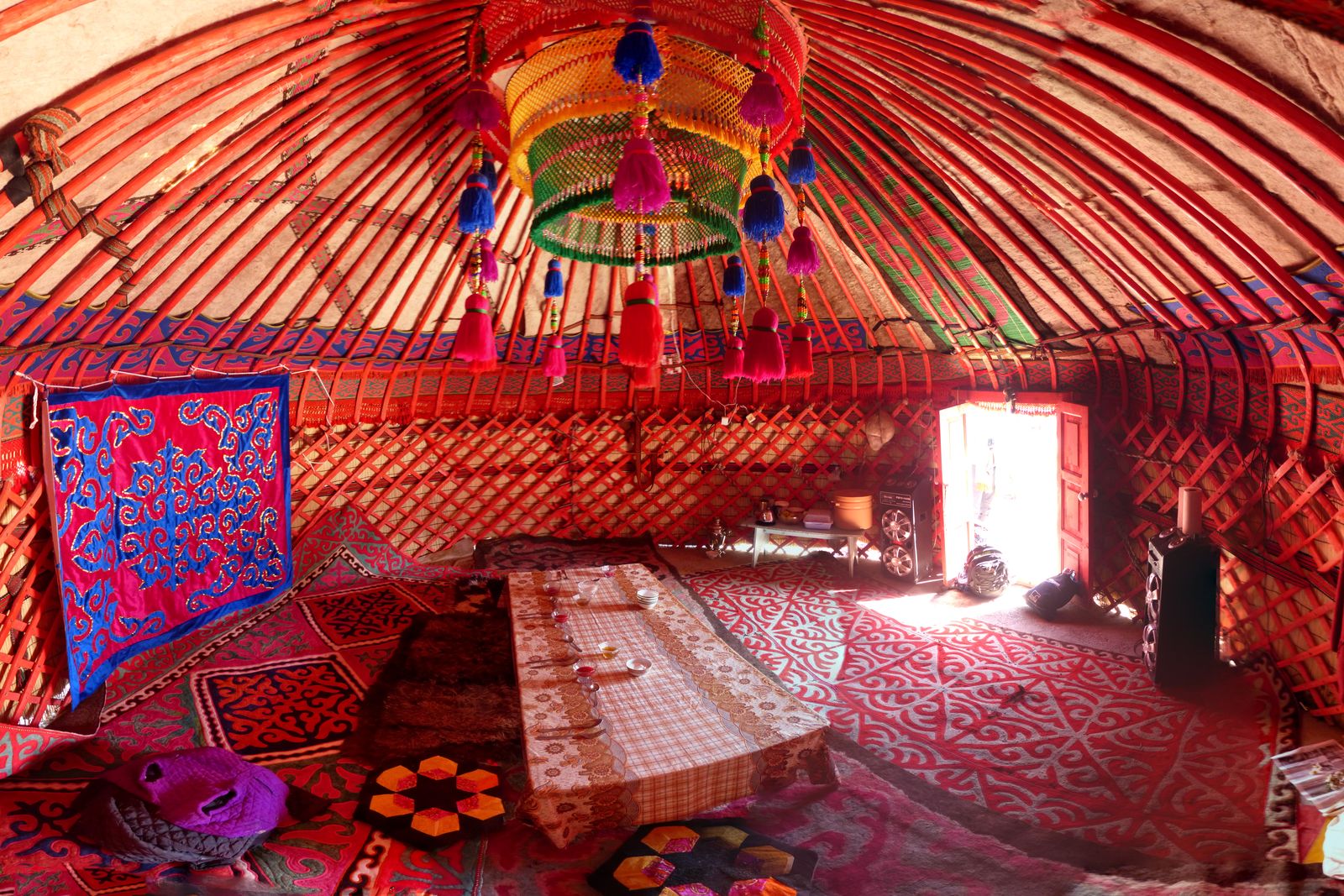 Photo: HaSe · CC BY-SA 4.0Inside a Kyrgyz yurt — felt, shyrdaks, roof crown
Forget "glamping" — a Song-Kul yurt camp is the real, working version, gently adapted for guests:
- Sleeping: 2–4 guests per yurt on thick floor mattresses (töshök) under heavy blankets, with a wood or dung stove lit on cold evenings. You will sleep warm.
- Food: home cooking — fresh bread, jams, laghman noodles, plov, endless tea. Say yes to kymyz (fermented mare's milk) at least once; it's the taste of the jailoo.
- Facilities: clean outdoor toilets and a washstand; some camps have a basic shower. No electricity beyond a small solar panel for lights — bring a power bank.
- Etiquette: shoes off at the yurt door, accept tea with your right hand, and ask before photographing your hosts. A small gift for the children is always welcome.
What to pack
Day-warm, night-cold, zero shops. This list covers a 2–3 day summer visit:
- Warm fleece or light down jacket
- Waterproof shell (storms arrive fast)
- Warm hat and light gloves
- Sunhat, sunglasses, SPF 50 (high-altitude sun)
- Comfortable trousers for horseback riding
- Hiking shoes or trainers with grip
- Headlamp or phone torch
- Power bank (no outlets at camp)
- Small towel and wet wipes
- Personal medication + basic painkillers
- Water bottle (boiled water available at camp)
- Cash in som for souvenirs and extras
On Asia Peaks tours, sleeping bag liners are rentable for $5 and helmets for riding are provided — everything else on the list is yours to bring.
Song-Kul FAQ
Can you visit Song-Kul without a tour?
How cold is Song-Kul at night?
Is there phone signal or Wi-Fi at Song-Kul?
When do the yurt camps open?
Do I need a permit to visit Song-Kul?
Is Song-Kul worth visiting?
Two ways to get there with us
By jeep: 3-day comfort trip, 2 yurt nights, horseback day — from $475.
In the saddle: 3-day horse trek from Kyzart village — from $420. Riding helmets provided.
Written by the Asia Peaks team. Our trips are guided by Ilgiz, who has guided from Kochkor — the gateway town to Song-Kul — for over 15 years. Prices checked August 2026 for the 2027 season.