
The Ala-Kul trek is a 3–4 day, roughly 50–55 km hike from Karakol in eastern Kyrgyzstan: up the Karakol valley to Ala-Kul lake (about 3,530–3,560 m), over the Ala-Kul pass (about 3,860–3,900 m) and down to the hot springs of Altyn-Arashan. It is best done from July to early September, needs no permit beyond a national-park entry fee, and fit hikers can do it without a guide. The real challenges are altitude and a steep scree descent after the pass.
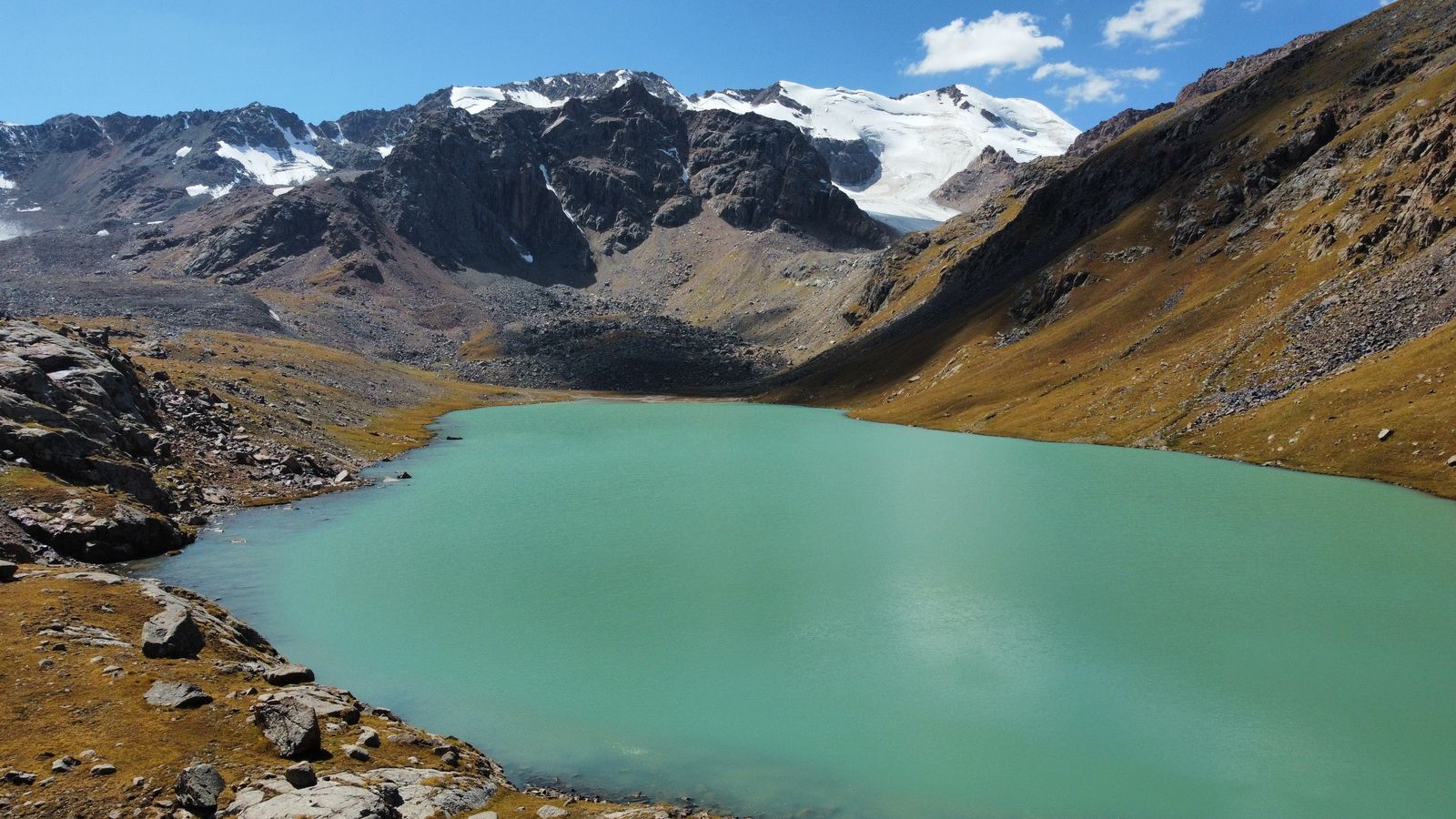 Ala-Kul lake
The Ala-Kul trek at a glance
Ala-Kul (also Ala-Kol, Ala-Köl or Alakul) is a rock-dammed lake about 2.8 km long in the Terskey Ala-Too range, fed by a glacier stream. Published altitudes differ by a few dozen metres, so we give ranges.
| Start | Karakol National Park gate at the mouth of the Karakol valley, a short ride from Karakol town (1,745 m) |
|---|---|
| Finish | Altyn-Arashan (about 2,350–2,450 m), then Ak-Suu village |
| Distance | About 50–55 km for the full loop (published figures range from 45 to 55 km) |
| Duration | 4 days comfortable, 3 days for fit, acclimatised hikers |
| Lake | About 3,530–3,560 m |
| High point | Ala-Kul pass, about 3,860–3,900 m |
| Season | July to early September is the reliable window |
| Permits | No border permit; national-park entry fee at the gate |
| Difficulty | Challenging: one big climbing day, altitude, loose scree, fast weather changes |
Route options
Karakol valley → Ala-Kul → Altyn-Arashan (the classic)
Most hikers walk the loop in this direction. The first day is a gentle climb through spruce forest along the Karakol river, so you spend a night at moderate altitude before the big step up to the lake. You then see the lake before the pass, and finish with a soak in the hot springs.
The reverse: Altyn-Arashan first
Starting from Altyn-Arashan gives you the hot springs on night one, but it means climbing the long, loose scree slope below the pass instead of descending it, and you reach the lake only after the hardest part. Few people choose it.
Shorter options
From Altyn-Arashan you can hike to the lake and back in a day: one hiker in August 2025 reported exactly 10 hours, with a very steep final section. You can also drive to the camps below the lake and hike up and back. Both take you to about 3,500 m without acclimatising.
Day-by-day stages (4-day version)
Distances and times vary between sources and with where your taxi drops you. Treat these as typical walking figures, not including breaks.
-
Day 1
Karakol valley gate → Sirota area
A steady walk up a dirt road and forest path beside the Karakol river. Seasonal tent and yurt camps sit around the Sirota area at roughly 2,600–2,800 m. A taxi from Karakol can drive you further up the valley road and cut this day short.
~15 km4.5–5 h~+650 m -
Day 2
Sirota → Ala-Kul lake
The hard climbing day. A steep path leaves the main valley and climbs past a waterfall, then over rougher ground to the lake's rock dam. You sleep by the lake at around 3,500 m, in your own tent or at a seasonal camp. Expect wind and a cold night.
~9–12 km5–6 h~+1,000 m -
Day 3
Ala-Kul → pass → Altyn-Arashan
Along the shore and up to the pass, with the lake and the glaciers of the Terskey Ala-Too behind you. Then comes the crux of the trek: a steep, loose scree descent into the Keldike valley, followed by a long walk down to Altyn-Arashan and its hot springs.
~15 km7–8 h~+350 m / −1,500 m -
Day 4
Altyn-Arashan → Ak-Suu → Karakol
Walk down the rough 4x4 road beside the Arashan river to Ak-Suu village (also called Teploklyuchenka), then take a local minibus back to Karakol. Or skip the walk: shared 4x4s run down from Altyn-Arashan in summer, priced per vehicle and split between passengers.
~15 km~4 hdownhill
The 3-day version drops one night. Most often days 2 and 3 are combined: Sirota to the lake, over the pass and down to Altyn-Arashan in one 9–10 hour day. Alternatives are a long first day straight to the lake (around eight hours even with a taxi to the upper bridge), or a 4x4 out of Altyn-Arashan instead of day four.
Difficulty and altitude sickness
Ala-Kul needs no ropes or technical skills, but it is not a stroll. The climb to the lake is steep and sustained, the scree below the pass is loose and tiring on the knees, and the weather can go from sun to hail within an hour, even in summer. Poles help a lot on the descent.
Altitude is the bigger issue. According to the NHS, altitude sickness usually starts above 2,500 m, with headache, nausea, dizziness, tiredness and poor sleep. Its rule of thumb is that above 3,000 m you should not sleep more than 500 m higher than the night before. On the standard route you sleep at about 2,700 m, then at about 3,500 m, which is a bigger jump than that. So:
- Spend at least a night or two in Karakol (1,745 m) before you start.
- Take day one slowly and drink plenty.
- Watch each other at the lake. Mild headache is common; symptoms that get worse are not.
Best time to hike Ala-Kul
- July to early September: the season. The pass is usually clear of snow and the seasonal camps are running. It is also busy: Caravanistan calls Ala-Kul the most popular trek in Kyrgyzstan and says it gets too busy in summer for many trekkers.
- June and late September: possible, with caveats. Snow can lie on the pass until mid-July, camps may not be up yet or may be closing, and nights at the lake drop below freezing. Bring your own tent and be ready to turn around.
- October to May: not a hiking season for the pass. Mid-May is too early for the high route. Lower walks in the Karakol and Altyn-Arashan valleys can still be pleasant in late spring and autumn.
For how Ala-Kul fits with Song-Kul, Kel-Suu and the rest of the country, see our guide to the best time to visit Kyrgyzstan.
Where to sleep
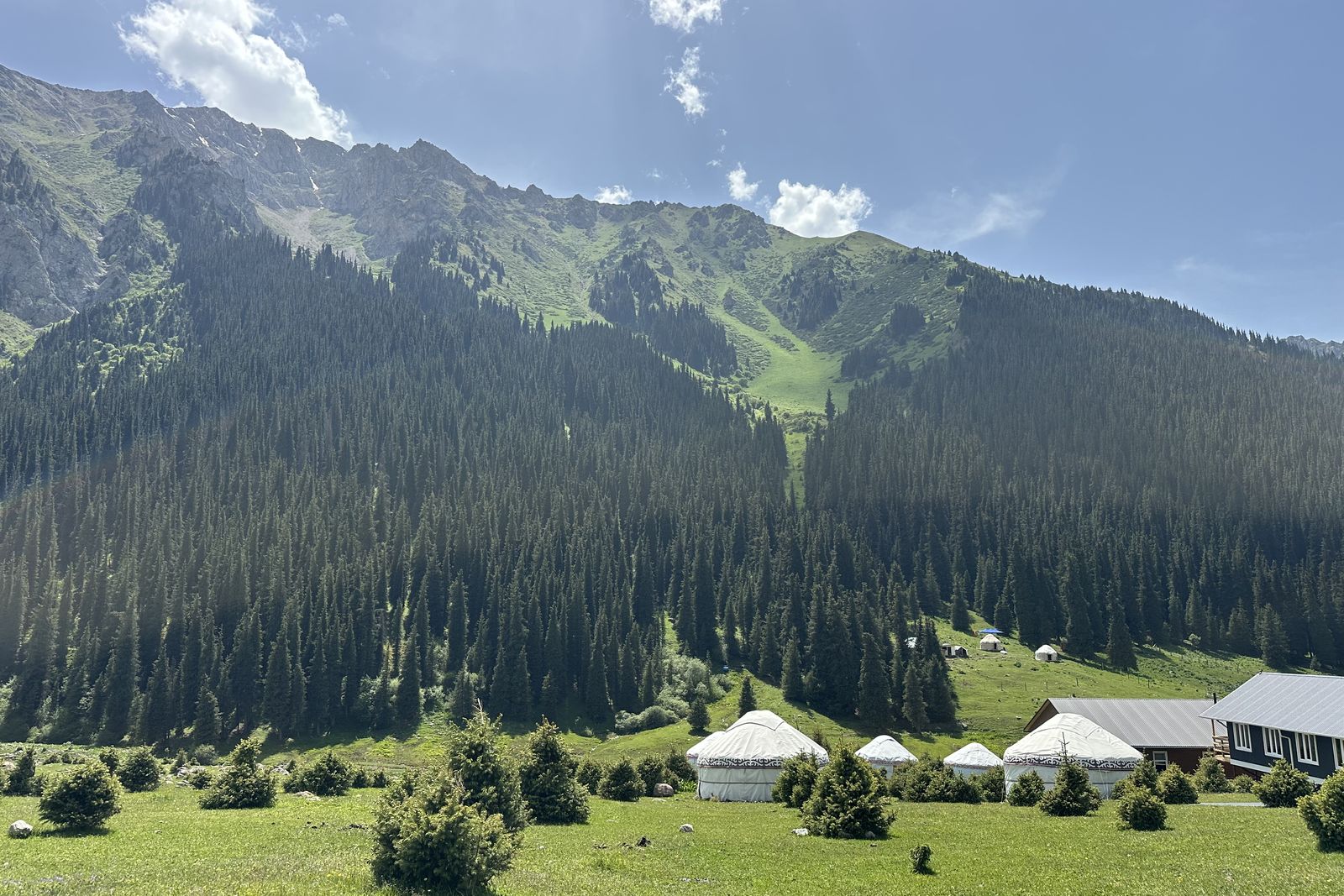 Altyn-Arashan valley
- Karakol: plenty of guesthouses and hostels. Most hikers spend a night here before and after the trek.
- Sirota area: seasonal yurt and tent camps, plus space to pitch your own tent. Some rent sleeping bags.
- Ala-Kul lake: in July and August, seasonal camps rent tents and serve simple meals. Wild camping is possible, but the ground is rocky and sloping and it is exposed to the wind.
- Altyn-Arashan: several guesthouses and camps, with sulphurous hot-spring pools in wooden bathhouses. Soaking usually costs a small separate fee.
Caravanistan notes that in season you can do the whole trek without a tent by using the camps. The camps are informal, though. In peak weeks it is worth booking through your Karakol guesthouse or the Destination Karakol tourist office. Outside July and August, carry a tent.
Permits and fees
- No border permit. Ala-Kul is not in one of Kyrgyzstan's border zones. Those are near the Chinese, Tajik and Kazakh borders; see our Kel-Suu guide for how that works.
- National-park entry: paid at the Karakol valley gate. Caravanistan and a 2026 trail report give 250 som per person; other recent reports range from 200 to 300 som. Expect a small extra charge for a tent. Carry small notes.
- Hot springs: paid separately in Altyn-Arashan.
There are no ATMs on the trail or in Altyn-Arashan. Bring enough cash in som for camps, food, transport out and the pools.
Getting to the trailhead from Karakol
- Bishkek to Karakol: about 380 km, usually 6–7 hours by bus or marshrutka (shared minibus).
- Karakol to the park gate: a local marshrutka runs from town towards the Karakol valley. Travellers in 2025–26 report it as no. 101, but numbers change, so ask at your guesthouse. A taxi is quicker and can continue up the valley road to one of the upper bridges.
- Back from Altyn-Arashan: walk down to Ak-Suu and catch a marshrutka to Karakol, or share a 4x4 from Altyn-Arashan. The road is rough and steep, and ordinary cars cannot use it.
Ala-Kul with a local guide
Our Ala-Kul Lake Trek follows the classic route over 3 days: Karakol valley, the lake, the pass and the Altyn-Arashan hot springs. Fixed price from $390 per person (group of 4). Itinerary and inclusions are on the tour page.
See the Ala-Kul Lake TrekWhat to pack
Warm days, freezing nights and no shops after Karakol. Several shops in Karakol rent tents, sleeping bags and stoves if you are travelling light.
- Broken-in hiking boots with ankle support
- Trekking poles (for the scree)
- Waterproof jacket and trousers
- Warm fleece or down jacket
- Hat, gloves and warm socks
- Sleeping bag rated below freezing
- Tent and mat, if not using camps
- Sunglasses, sunhat, SPF 50
- Water bottle and purification tablets or filter
- Snacks for long days
- Headlamp
- Offline map on your phone, plus power bank
- Blister kit and basic first aid
- Swimwear and a small towel for the hot springs
- Cash in som, in small notes
- Passport (guesthouse registration)
Guided or independent?
Honestly, many people do not need a guide for Ala-Kul. If you have trekked at altitude before, are carrying a tent and are going in July or August, the trail is busy and easy to follow. A 2026 route guide puts independent costs at roughly $25–45 a day with your own tent and food.
| Independent | Guided | |
|---|---|---|
| Cost | Lowest: transport, park fee, camps or your own tent | Higher, but one fixed price |
| Logistics | You arrange taxis, camps, food and the ride out | Arranged before you arrive |
| Altitude and weather calls | Yours alone | Someone who knows the route helps decide when to push on and when to turn back |
| Language | Some Russian or Kyrgyz helps with drivers and camps | English-speaking guide |
| Best for | Experienced hikers in July–August | First time at altitude, short on time, or early or late in the season |
If you have questions before you decide, write to us on WhatsApp or at hello@asiapeaks.com. We reply within 24 hours, including when the answer is "you don't need us for this one."
Ala-Kul trek FAQ
How hard is the Ala-Kul trek?
Do you need a guide for the Ala-Kul trek?
When is the best time to hike Ala-Kul?
Do you need a permit for Ala-Kul?
Can you hike to Ala-Kul in one day?
Planning more of Kyrgyzstan? Read our guides to Song-Kul, Kel-Suu lake and the best time to visit, or see all travel guides.
Sources and further reading
- Ala-Köl, Wikipedia: lake altitude, size and rock dam
- Altyn Arashan, Wikipedia: altitude and hot springs
- Karakol, Wikipedia: town altitude and distance from Bishkek
- Trekking around Karakol, Caravanistan: route, camps, park fee
- Alakul hike from Altyn Arashan in one day, Caravanistan forum (2025)
- Ala Kul trek, Journal of Nomads: stages, altitudes, season
- Complete guide to the Ala Kul trek, Beyond Wild Places (2025)
- The Ala Kul trek, The Planet Edit (2026): transport and fees
- Ala Kul and Altyn Arashan in 2 days, Bucketlistly: lake camps, shared 4x4s
- Ala-Kul 3-day route, KG Nomad: season and independent costs
- Altitude sickness, NHS
Last updated: September 2026. Fees, transport and camp arrangements change from season to season, so check locally before you set off.